* do not touch * – Alchemy

Alchemy

Alchemy is an influential philosophical tradition whose early practitioners’ claims to profound powers were known from antiquity. The defining objectives of alchemy are varied; these include the creation of the fabled philosopher’s stone possessing powers including the capability of turning base metals into the noble metals gold or silver, as well as an elixir of life conferring youth and immortality. Western alchemy is recognized as a protoscience that contributed to the development of modern chemistry and medicine. Alchemists developed a framework of theory, terminology, experimental process and basic laboratory techniques that are still recognizable today. But alchemy differs from modern science in the inclusion of Hermetic principles and practices related to mythology, religion, and spirituality.
From Wikipedia, the free encyclopedia

real ?

Reality

In philosophy, reality is the state of things as they actually exist, rather than as they may appear or might be imagined.[1] In a wider definition, reality includes everything that is and has been, whether or not it is observable or comprehensible. A still more broad definition includes everything that has existed, exists, or will exist.

Philosophers, mathematicians, and others ancient and modern such as Aristotle, Plato, Frege, Wittgenstein, Russell etc., have made a distinction between thought corresponding to reality, coherent abstractions, and that which cannot even be rationally thought. By contrast existence is often restricted solely to that which has physical existence or has a direct basis in it in the way that thoughts do in the brain.

Reality is often contrasted with what is imaginary, delusional, (only) in the mind, dreams, what is abstract, what is false, or what is fictional. The truth refers to what is real, while falsity refers to what is not. Fictions are considered not real.

From Wikipedia, the free encyclopedia

Summer solutions

20120825-195109.jpg

Fountain

A fountain (from the Latin “fons” or “fontis”, a source or spring) is a piece of architecture which pours water into a basin or jets it into the air to supply drinking water and/or for a decorative or dramatic effect.

Fountains were originally purely functional, connected to springs or aqueducts and used to provide drinking water and water for bathing and washing to the residents of cities, towns and villages. Until the late 19th century most fountains operated by gravity, and needed a source of water higher than the fountain, such as a reservoir or aqueduct, to make the water flow or jet into the air.

In addition to providing drinking water, fountains were used for decoration and to celebrate their builders. Roman fountains were decorated with bronze or stone masks of animals or heroes. In the Middle Ages, Moorish and Muslim garden designers used fountains to create miniature versions of the gardens of paradise. King Louis XIV of France used fountains in the Gardens of Versailles to illustrate his power over nature. The baroque decorative fountains of Rome in the 17th and 18th centuries marked the arrival point of restored Roman aqueducts and glorified the Popes who built them.[2]

By the end of the 19th century, as indoor plumbing became the main source of drinking water, urban fountains became purely decorative. Mechanical pumps replaced gravity and allowed fountains to recycle water and to force it high into the air. The Jet d’Eau in Lake Geneva, built in 1951, shoots water 140 metres (460 ft) in the air. The highest such fountain in the world is King Fahd’s Fountain in Jeddah, Saudi Arabia, which spouts water 260 metres (850 ft) above the Red Sea.[3]

Fountains are used today to decorate city parks and squares; to honor individuals or events; for recreation and for entertainment. A Splash pad or spray pool allows city residents to enter, get wet and cool off in summer. The musical fountain combines moving jets of water, colored lights and recorded music, controlled by a computer, for dramatic effects. Drinking fountains provide clean drinking water in public buildings, parks and public spaces.

Man in Trance


  • Enchantment: a psychological state induced by (or as if induced by) a magical incantation
  • A state of mind in which consciousness is fragile and voluntary action is poor or missing
  • A state resembling deep sleep
  • Capture: attract; cause to be enamored; “She captured all the men’s hearts”; in the sense of entranced
  • A condition of apparent sleep or unconsciousness, with marked physiological characteristics, in which the body of the subject is liable to possession
  • An out-of-body experience in which one feels they have passed out of the body into another state of being, a rapture, an ecstasy. In a general way, the entranced conditions thus defined are divided into varying degrees of a negative, unconscious state, and into progressive gradations of a positive, conscious, illumining condition.
  • A state of hyper or enhanced suggestibility.
  • An induced or spontaneous sleep-like condition of an altered state of consciousness, which permits the subject’s physical body to be utilized by the discarnate as a means of expression[disambiguation needed]
  • An altered state of awareness induced via hypnotism in which unconscious or dissociated responses to suggestion are enhanced in quality and increased in degree
  • A state induced by the use of hypnosis; the person accepts the suggestions of the hypnotist
  • A state of consciousness characterized by extreme dissociation often to the point of appearing unconscious.

witness temoin zeuge

A witness is someone who has, who claims to have, or is thought by someone with authority to compel testimony to have, knowledge relevant to an event or other matter of interest. In law a witness is someone who, either voluntarily or under compulsion, provides testimonial evidence, either oral or written, of what he or she knows or claims to know about the matter before some official authorized to take such testimony.

Investigations

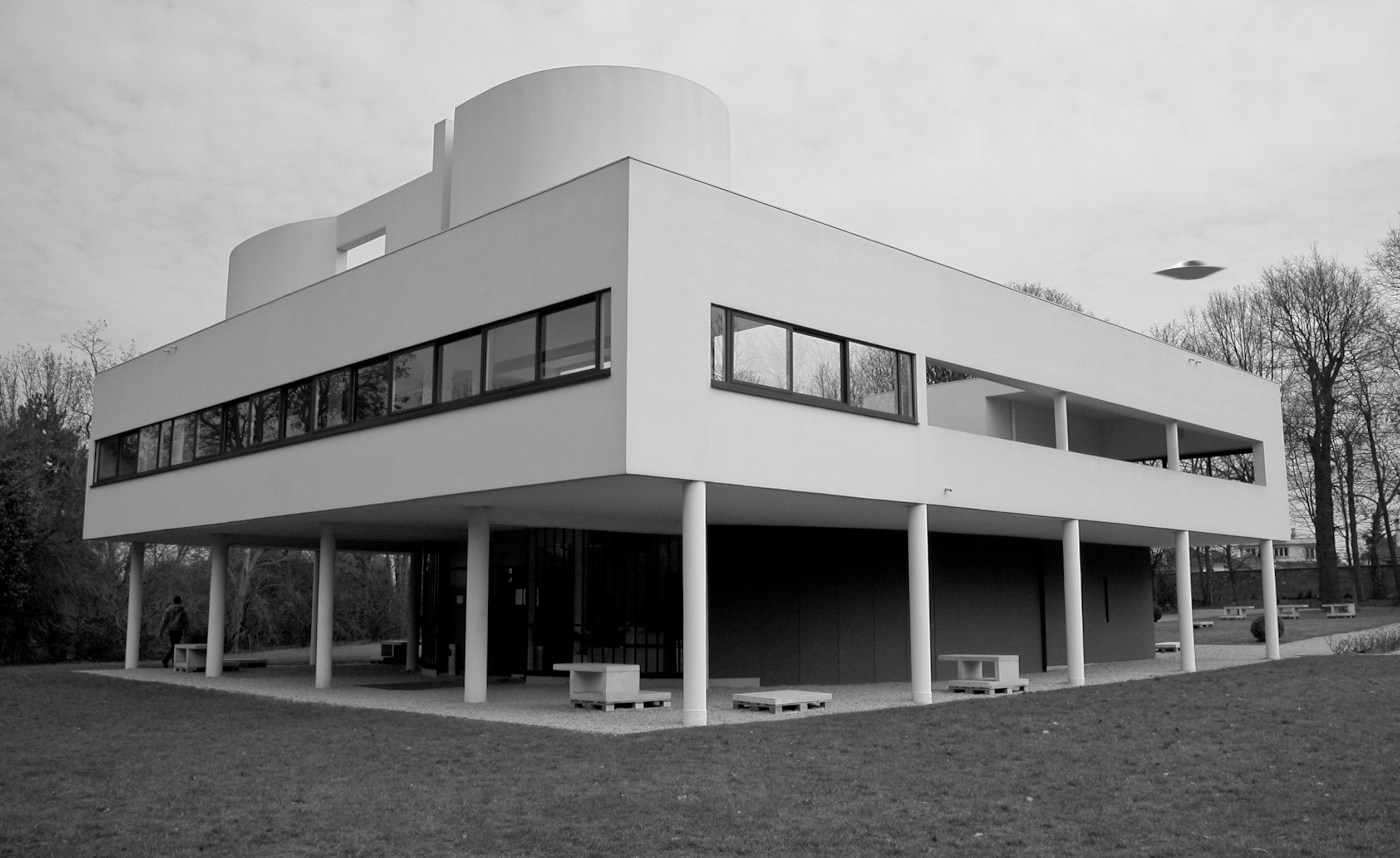
An unidentified flying object, often abbreviated UFO or U.F.O., is an unusual apparent anomaly in the sky that is not readily identifiable to the observer as any known object, often associated with extraterrestrial life.

UFOs have been subject to investigations over the years that varied widely in scope and scientific rigor. Governments or independent academics in the United States, Canada, the United Kingdom, Japan, Peru, France, Belgium, Sweden, Brazil, Chile, Uruguay, Mexico, Spain, and the Soviet Union are known to have investigated UFO reports at various times.

Among the best known government studies are the ghost rockets investigation by the Swedish military (1946–1947), Project Blue Book, previously Project Sign and Project Grudge, conducted by the United States Air Force from 1947 until 1969, the secret U.S. Army/Air Force Project Twinkle investigation into green fireballs (1948–1951), the secret USAF Project Blue Book Special Report #14[37] by the Battelle Memorial Institute, and Brazilian Air Force Operation Saucer (1977). France has had an ongoing investigation (GEPAN/SEPRA/GEIPAN) within its space agency CNES since 1977; the government of Uruguay has had a similar investigation since 1989.

From Wikipedia, the free encyclopedia

happy friday!

Friday

In many countries, Friday is the last day of a five-day working week, and is viewed as a cause for celebration or relief (leading to the phrase “TGIF“, for “Thank God/Goodness It’s Friday”). In some workplaces workers wear less formal attire on Fridays, known as Casual Friday or Dress-Down Friday. In other countries, (see workweek and weekend) Friday is the first day of the weekend, with Saturday the second. In Saudi Arabia, Afghanistan and Iran, Friday is the last day of the weekend, with Saturday as the first day of the working week. Bahrain, the United Arab Emirates (UAE) and Kuwait also followed this convention until they changed to a Friday–Saturday weekend, on 1 September 2006 in Bahrain and UAE,[1] and a year later in Kuwait.[2] In Iran, Friday is the only weekend day.


From Wikipedia, the free encyclopedia

red shows the destination

Red

On the color wheel long used by painters, and in traditional color theory, red is one of the three primary colors, along with blue and yellow. Painters could mix red and yellow to get orange, and red and blue to get violet.

In modern color theory, also known as the RGB color model, red, green and blue are additive primary colors. Red, green and blue light combined together makes white light, and these three colors, combined in different mixtures, can produce almost any color. This is the principle used to make the colors on your computer screen and television.

So that the maximum number of colors can be accurately reproduced on your computer screen, each color has been given a code number, or sRGB, which tells your computer the intensity of the red, green and blue components of that color. The intensity of each component is measured on a scale of zero to 255, which means the complete list includes 16,777,216 distinct colors and shades. The sRGB number of pure red, for example, is 255, 00, 00, which means the red component is at maximum intensity, and there is no green or blue. The sRGB number for crimson is 220, 20, 60, which means that the red is slightly less intense and therefore darker, there is some green, which leans it toward orange; and there is a larger amount of blue, which makes it slightly blue-violet.


In western countries red is a symbol of martyrs, courage and sacrifice, [23] Beginning in the Middle Ages, the Pope and Cardinals of the Roman Catholic Church wore red to symbolize the blood of Christ and the Christian martyrs. The banner of the Christian soldiers in the First Crusade was a red cross on a white field, the St. George’s Cross. According to Christian tradition, Saint George was a Roman soldier who was a member of the guards of the Emperor Diocletian. who refused to renounce his Christian faith and was martyred. The Saint George’s Cross became the Flag of England in the 16th century, and now is part of the Union Flag of the United Kingdom, as well as the Flag of the Republic of Georgia. [64]

In 1587, Mary, Queen of Scots, accused of treason against Queen Elizabeth I, wore a red shirt at her execution, to proclaim that she was an innocent martyr.[65]

The Thin Red Line was a famous incident in the Battle of Balaclava (1854) during the Crimean War, when a thin line of Scottish Highlander infantry, assisted by Royal Marines and Turkish infantrymen, repulsed a Russian cavalry charge. It was widely reported in the British press as an example of courage in the face of overwhelming odds and became a British military legend.

In the 19th century novel The Red Badge of Courage by Stephen Crane, a story about the American Civil War, the red badge was the blood from a wound, by which a soldier could prove his courage.[66