facing light & hanging Angels

the great escape…

repeat

attention

Fire the show

In photography, exposure is the amount of light allowed to fall on each area unit of a photographic medium (photographic film or image sensor) during the process of taking a photograph. Exposure is measured in lux seconds, and can be computed from exposure value (EV) and scene luminance in a specified region.

In photographic jargon, an exposure generally refers to a single shutter cycle. For example: a long exposure refers to a single, protracted shutter cycle to capture enough low-intensity light, whereas a multiple exposure involves a series of relatively brief shutter cycles; effectively layering a series of photographs in one image. For the same film speed, the accumulated photometric exposure (Hv) should be similar in both cases.

Head Architect


A leader (Head) in a formal, hierarchical organization, who is appointed to a managerial position, has the right to command and enforce obedience by virtue of the authority of his position. However, he must possess adequate personal attributes to match his authority, because authority is only potentially available to him. In the absence of sufficient personal competence, a manager may be confronted by an emergent leader who can challenge his role in the organization and reduce it to that of a figurehead. However, only authority of position has the backing of formal sanctions. It follows that whoever wields personal influence and power can legitimize this only by gaining a formal position in the hierarchy, with commensurate authority.[1]

An architect is a person trained in the planning, design and oversight/supervision of the construction of buildings. To practice architecture means to offer or render services in connection with the design and construction of a building, or group of buildings and the space within the site surrounding the buildings, that have as their principal purpose human occupancy or use.[1] Etymologically, architect derives from the Latin architectus, itself derived from the Greek arkhitekton (arkhi-, chief + tekton, builder), i.e. chief builder.[2]

Professionally, an architect’s decisions affect public safety, and thus an architect must undergo specialized training consisting of advanced education and a practicum (or internship) for practical experience to earn a license to practice architecture. The practical, technical, and academic requirements for becoming an architect vary by jurisdiction (see below).

Reflection over storm cloud

Reflection is the capacity of humans to exercise introspection and the willingness to learn more about their fundamental nature, purpose and essence. The earliest historical records demonstrate the great interest which humanity has had in itself. Human self-reflection invariably leads to inquiry into the human condition and the essence of humankind as a whole.

Human self-reflection is related to the philosophy of consciousness, the topic of awareness, consciousness in general and the philosophy of mind.

From Wikipedia, the free encyclopedia

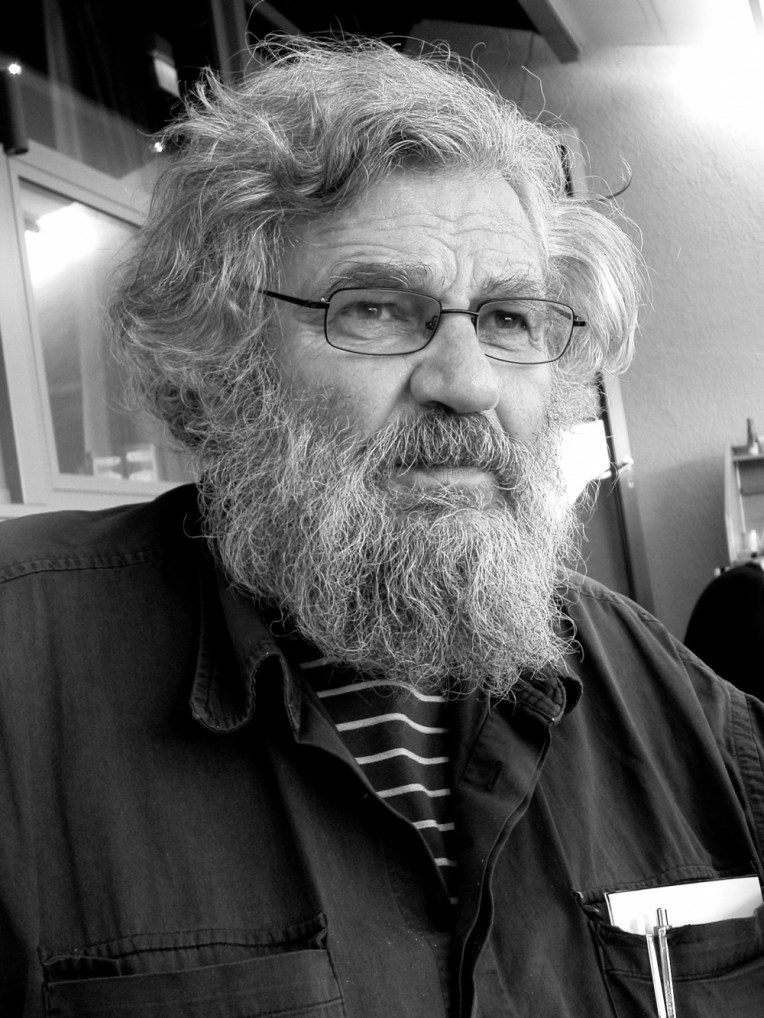
Curiosity

Curiosity (from Latin curiosus “careful, diligent, curious,” akin to cura “care”) is a quality related to inquisitive thinking such as exploration, investigation, and learning, evident by observation in human and many animal species[citation needed]. The term can also be used to denote the behavior itself being caused by the emotion of curiosity. As this emotion represents a thirst for knowledge, curiosity is a major driving force behind scientific research and other disciplines of human study.

Although many living beings have an innate capability of curiosity, it should not be categorized as an instinct because it is not a fixed action pattern; rather it is an innate basic emotion because while curiosity can be expressed in many ways, the expression of an instinct is typically more fixed and less flexible. Curiosity is common to human beings at all ages from infancy[1] through adulthood,[2] and is easy to observe in many other animal species. These include apes, cats, rodents,[3] fish, reptiles, and insects; as well as many others.

Many aspects of exploration are shared among all beings, as all known terrestrial beings share similar aspects: limited size and a need to seek out food sources.[vague]

In fact, in its development as wonder or admiration, it is generally curiosity that makes a human being want to become an expert in a field of knowledge.[citation needed] Though humans are sometimes considered particularly curious,[citation needed] they sometimes seem to miss the obvious when compared to other animals.[citation needed]. What seems to happen is that human curiosity about curiosity itself (i.e. meta-curiosity or meta-interest),[citation needed] combined with the ability to think in an abstract way, leads to mimesis, fantasy and imagination – eventually leading to an especially human way of thinking (“human reason“), which is abstract and self-aware, or conscious

From Wikipedia, the free encyclopedia

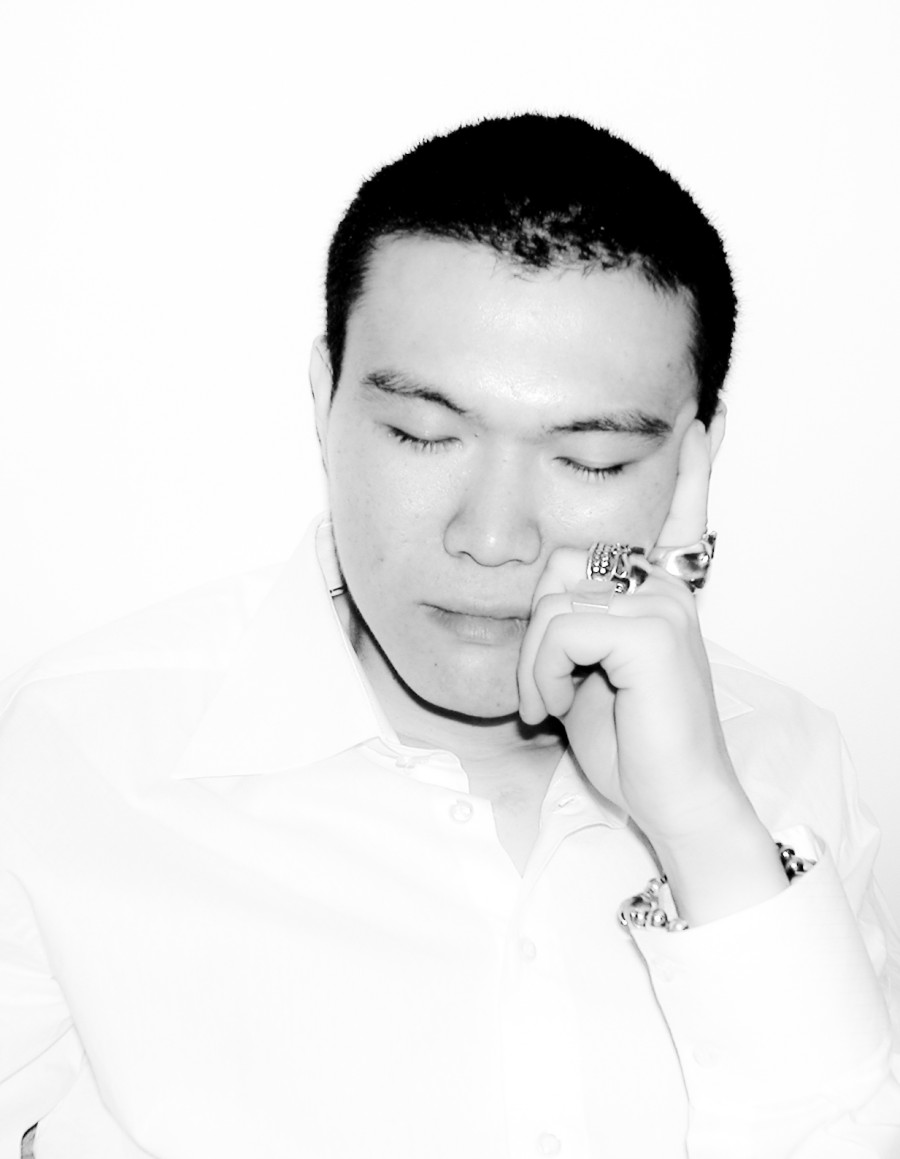
Man in Trance


  • Enchantment: a psychological state induced by (or as if induced by) a magical incantation
  • A state of mind in which consciousness is fragile and voluntary action is poor or missing
  • A state resembling deep sleep
  • Capture: attract; cause to be enamored; “She captured all the men’s hearts”; in the sense of entranced
  • A condition of apparent sleep or unconsciousness, with marked physiological characteristics, in which the body of the subject is liable to possession
  • An out-of-body experience in which one feels they have passed out of the body into another state of being, a rapture, an ecstasy. In a general way, the entranced conditions thus defined are divided into varying degrees of a negative, unconscious state, and into progressive gradations of a positive, conscious, illumining condition.
  • A state of hyper or enhanced suggestibility.
  • An induced or spontaneous sleep-like condition of an altered state of consciousness, which permits the subject’s physical body to be utilized by the discarnate as a means of expression[disambiguation needed]
  • An altered state of awareness induced via hypnotism in which unconscious or dissociated responses to suggestion are enhanced in quality and increased in degree
  • A state induced by the use of hypnosis; the person accepts the suggestions of the hypnotist
  • A state of consciousness characterized by extreme dissociation often to the point of appearing unconscious.